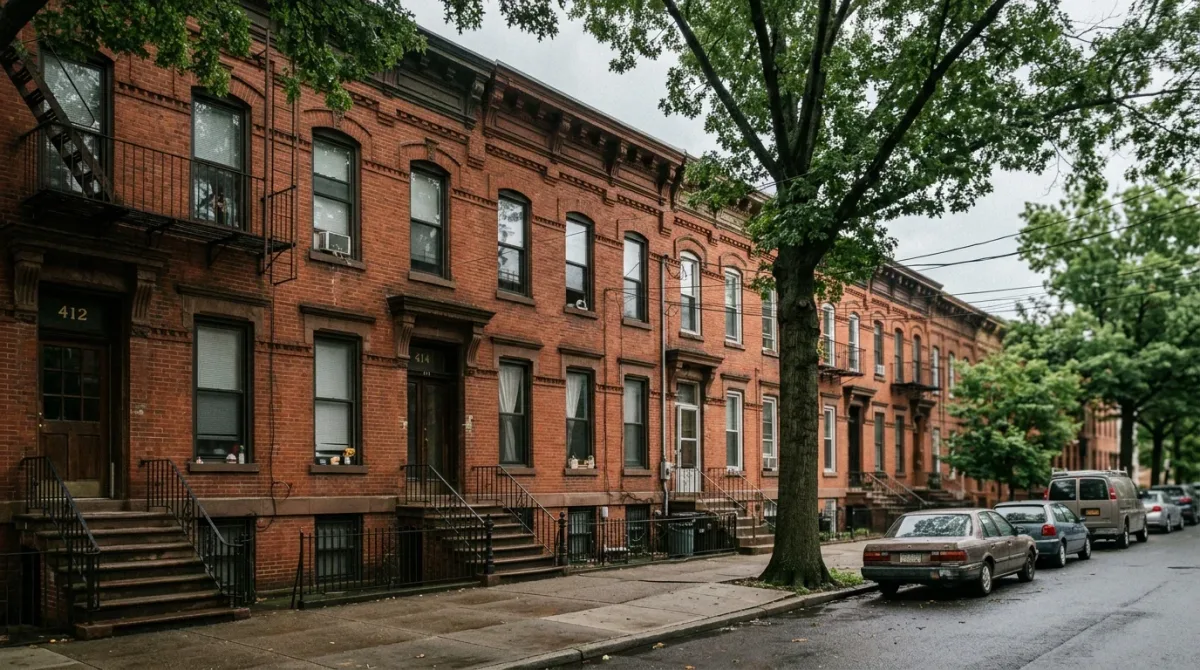
Newark tenants who get a rent increase notice can check it against one number: 4%. That's the yearly cap set by the city's rent control ordinance, enforced by the Division of Rent Control at 920 Mayor Kenneth A. Gibson Boulevard, for apartments built or substantially rehabbed before the law's exemption cutoffs.
What Does Newark's Rent Control Ordinance Cover?
The ordinance regulates most multi-family residential rental units across the city, from the Ironbound to the Central Ward, but it does not reach every apartment. Commercial space, public housing, and day-to-day motel or hotel rentals fall outside its reach entirely, according to the city's Division of Rent Control.
Whether a specific building is covered depends on when it was built and whether the owner filed for an exemption. That means two tenants on the same block can be under different rules, and the office says the surest way to know is to call and ask.
There's a compliance side to coverage, too. According to the Division of Rent Control, an increase isn't allowed at all if the dwelling isn't in substantial compliance with the city's property codes, or if the landlord hasn't met the ordinance's registration requirements for the building. A tenant facing an increase can ask the office whether the building is properly registered before assuming the number on the notice is legal.
How Much Can a Landlord Raise the Rent Each Year?
The city ties the allowable increase to the Consumer Price Index, capped at 4% annually, the Division of Rent Control says. In practice, the office has applied the CPI-linked figure to the tenant's current legal base rent — for example, a 1.3% increase on a $1,000 base rent works out to $13 a month, the office's own example shows.
That formula was suspended once in recent memory. From April 2020 through September 2023, during the COVID-19 pandemic, the city froze rent control increases at 0%, according to the city's published Rent Control FAQ. Landlords whose buildings fall under the ordinance could not apply the CPI figure at all during that stretch, regardless of what the index itself was doing.
The CPI percentage used isn't fixed year to year — it moves with the index, and the office has cited figures as low as roughly 1.3% and as high as the 4% ceiling in its own published examples. That's why the Rent Control Board, not a landlord's own math, is the reference point for what a specific increase should be in a specific month.
Which Newark Buildings Are Exempt From the Cap?
Newly constructed multi-family buildings can be exempted from rent control for up to 30 years if the owner secures a certificate before the building is occupied, per the city's FAQ. Buildings that go through substantial rehabilitation can qualify for shorter exemptions, generally one to five years, with proper certification filed with the city.
Landlords are required to notify prospective tenants before signing a lease if a unit carries one of these exemptions, per state guidance on the subject. A lease that doesn't mention an exemption is one more reason to ask before signing — and one more reason to call the Division of Rent Control directly rather than take a landlord's word for a building's status.
What Can a Tenant Do If an Increase Looks Too High?
A tenant who believes a landlord has exceeded the legal increase can file a rent adjustment application with the city's Rent Control Board, which handles petitions through hearings and mediation, the Division of Rent Control says. The board cannot rule on lease breaches, discrimination, harassment, or retaliation claims — those require Superior Court or New Jersey's Department of Community Affairs.
Landlords cannot evict a tenant for filing a petition, according to the city's FAQ. Either side can appeal a board decision to Superior Court within 45 days of the ruling. On the other side of the ledger, landlords can also petition the board for increases above the CPI cap, citing hardship, major capital improvements, rehabilitation work, tax surcharges, or rising utility costs — those requests go through the same hearing process as tenant petitions, per the city's FAQ.
The Division of Rent Control can be reached at 973-733-3675 or [email protected]; the office says it can counsel tenants and landlords through the process but cannot give legal advice, and no lawyer is required to file a petition.
Does New Jersey Have a Statewide Rent Control Law?
No. "The State of New Jersey does not have a law governing rent increases," the state Department of Community Affairs says in its published guidance on rent increases. Rent control in New Jersey exists only where a city or town has passed its own ordinance, and those ordinances vary from one municipality to the next — a cap that applies in Newark's Ironbound may not exist at all a few towns over.
State rules do set a floor that applies everywhere, rent-controlled or not: a landlord must give a written notice of any rent increase, generally at least 30 days ahead or in line with the lease's own terms, and an increase can only take effect at the start of a new lease term, never in the middle of one, per the state bulletin. For a month-to-month tenancy, that notice has to be given as of the first day rent is due for the affected period, the bulletin says.
Tenants outside Newark who want to know whether their own town has adopted rent control are directed, in the state's guidance, to their municipal clerk's office — the local rulebook, not a statewide one, decides what a landlord can charge.
For Newark tenants, the ordinance is one of the more direct tools the city offers against fast-rising rent — but it only works for the renters who know it exists, and who know which side of the exemption line their own building falls on.
For a related calendar perspective, read Asbury FRESH Farmers Market Returns to Press Plaza Through September.
For more context, read How a 1031 Exchange Lets Landlords Defer Capital Gains Tax.
For more context, read The 45-Day and 180-Day Rules That Govern a 1031 Exchange.
For more context, read How Wilton Manors Became South Florida's LGBTQ+ Hub.