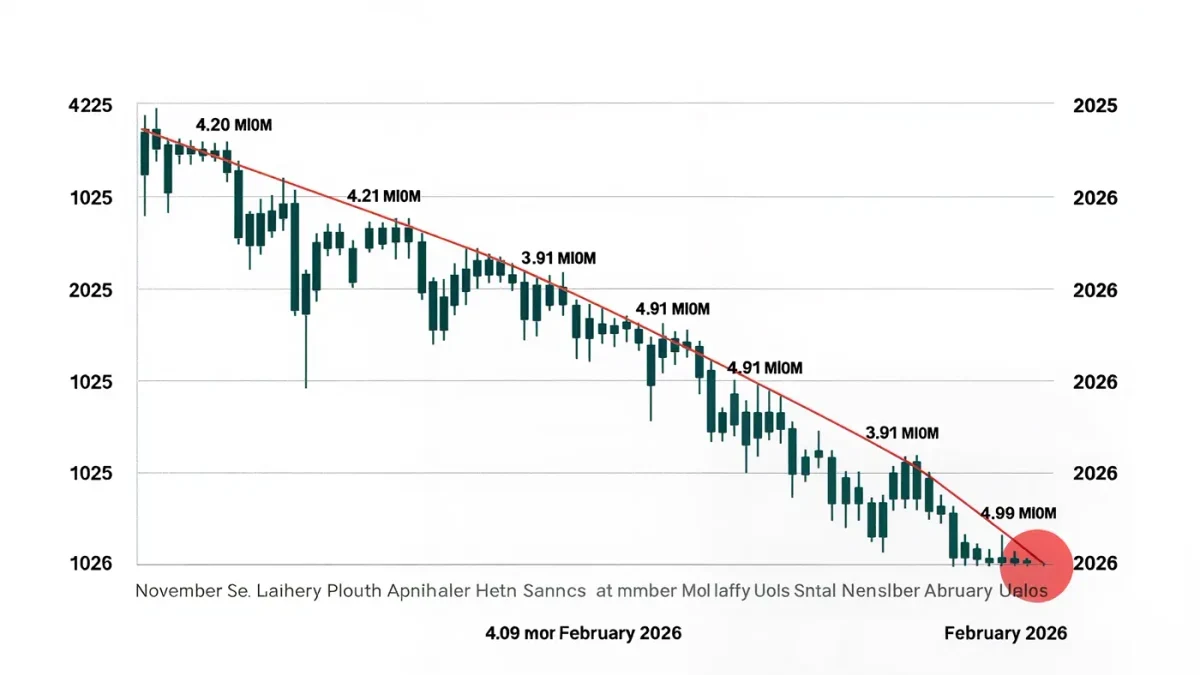
Existing-home sales dropped 8.4 percent from December to a seasonally adjusted annual rate of 3.91 million in January 2026, the slowest pace since late 2023, the National Association of Realtors reported on February 20, 2026. Sales sat 4.4 percent below their year-earlier level, and NAR attributed the weakness to mortgage rates that stayed elevated even as they eased within the month. For buyers who stayed in the market, the flip side was room to negotiate: inventory, while still lean historically, kept building toward the months of supply that followed in spring data.
What the number means for the people actually living through it — below.
What drove the January drop?
Seasonality plus rate psychology. January is routinely the year's slowest closing month since its contracts are signed over the holidays, and with 30-year rates in the six-percent range per Freddie Mac's weekly survey through the period, the rate lock-in effect continued pinching supply while stretching buyers' math. NAR's commentary flagged the same pair — elevated rates restraining affordability on the demand side and discouraging would-be sellers on the supply side — that has shaped the market since 2022. A sharp single-month fall after a strong December also overstates the trend; February's data bore that out.
What did prices do?
The median existing-home price held near the high-$300,000s in January, essentially flat on a year-over-year basis — continuing 2025's pattern of flat-to-slow national price growth after the run-up years. Flat medians national-wide hide the split underneath: still-rising prices in supply-starved affordable metros, softening at the top end where inventory of large, expensive homes is thickest. For move-down buyers and remote-income households, the top-end softness was the quiet opportunity of the quarter.
What happened next?
Rebound, partly mechanical. Per reporting on NAR's March release, February 2026 sales unexpectedly rose 1.7 percent to a 4.09 million annual pace, with the median around $398,000 and months of supply growing — the kind of sequence economists read as January undershooting the trend rather than a collapse beginning. Realtor.com's monthly data through the same stretch showed active listings climbing about 8 percent year over year, consistent with the slow thaw in supply that has defined 2025–2026.
What should a 2026 buyer take from it?
Three practical readings. Slow national months are negotiating months: sellers whose listings aged through January entertained price corrections and credits that they would not have in a frothy spring. The lock-in effect still governs inventory — expect thin, fast-moving selections in the affordable tiers and patient inventory at the top. And single-month headlines cut both ways: a weak January print and a strong February print described the same market, one where mortgage-rate expectations, not fundamentals, set the tempo. Watch the rate, not the drama.