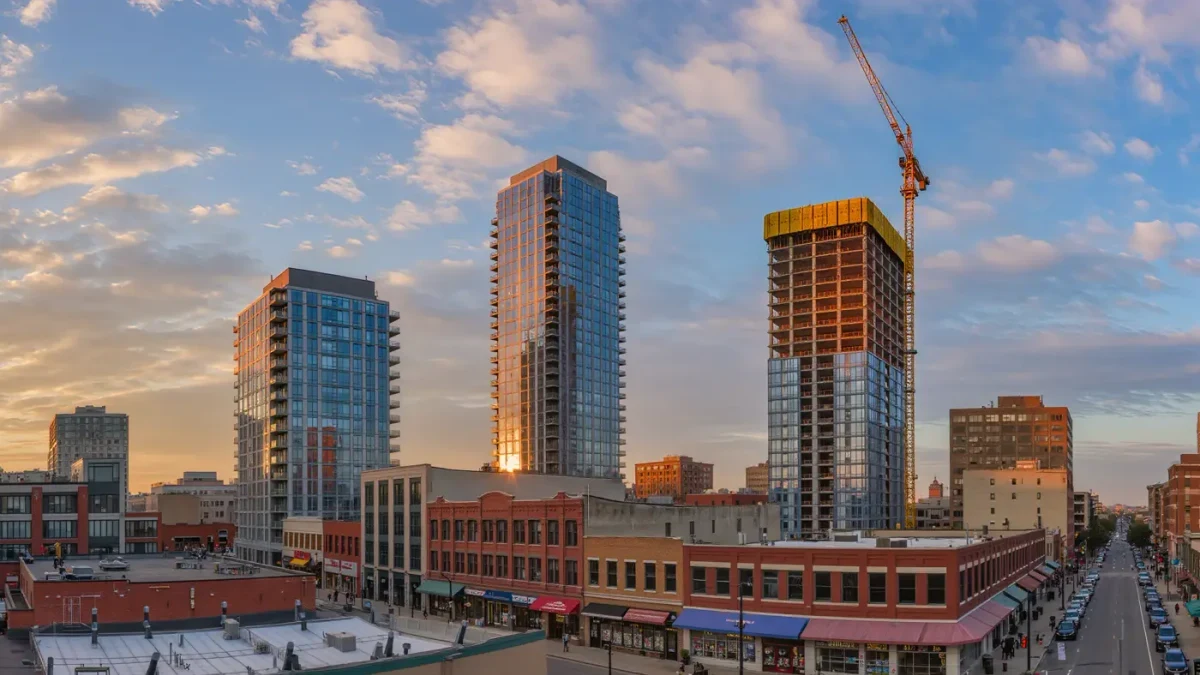
Downtown apartment rents in many U.S. cities have softened since the pandemic-era peaks: record apartment construction through 2023–2025 — multifamily completions hit their highest levels since the 1970s, concentrated in Sun Belt and downtown submarkets — met a demand side reshaped by hybrid work, and vacancy rose enough that landlords turned to concessions (weeks of free rent, parking waivers) that function as price cuts without touching the headline number. Census and industry rental data through 2025–2026 show the pattern: center-city submarkets with heavy new supply posting flat-to-falling effective rents while overall rents grew modestly elsewhere.
The story is a supply-and-demand lesson with a map.
What caused the downtown supply wave?
Three streams converged. Construction pipeline momentum: projects financed in 2019–2021's low-rate, high-rent environment delivered three to four years later, exactly when hybrid work had thinned the weekday population that had priced downtown living at a premium. Zoning and incentives: cities spent the decade before easing downtown building and later paying for office-to-residential conversions, adding units to the same submarket. Land economics: downtown high-rises were the format that penciled at 2021 rents — and construction, unlike demand, cannot reverse once the crane is up. The result nationally: the largest apartment delivery years in half a century landing into a cooled market.
Why did demand shift away from downtowns?
Remote and hybrid work cut the commute-value of center-city housing — the premium existed largely because people needed to be at a desk five days a week. Households re-optimized toward space: the pandemic-era move to larger homes farther out tapered, but it did not reverse; the five-day downtown worker did not fully return. At the same time, downtown's own amenity base shifted — fewer lunches and happy hours from office crowds, more residents-oriented retail as conversions added population — a chicken-and-egg transition still playing out block by block through the mid-2020s.
What does cheaper downtown rent actually mean for renters?
- Leverage: concessions are negotiable — ask for more weeks free, parking, or unit upgrades; in a concession market the listed rent is the opening bid, and mid-2026 renewals in soft submarkets were being renegotiated downward.
- Timing: winter lease signings in high-vacancy buildings carry the deepest discounts.
- The quality arbitrage: buildings completed in the 2020s delivery wave are competing with each other — a renter can now get new-construction finishes at prices that rented 1970s stock two years ago.
Where isn't it cheaper?
The exceptions define the map: supply-constrained gateway cores (Manhattan, San Francisco's recovered neighborhoods) where little new product delivered; the most walkable, amenity-rich streets — downtowns that converted to genuinely residential 24-hour districts kept their pricing power while 9-to-5 districts lagged; and rent-controlled and stabilized stock where the market rate moves but the inventory does not. The pattern's lesson: it was never "downtown" that got cheaper — it was specific buildings on specific blocks that delivered at the wrong moment, and renters holding a map of completions and concessions hold the market's real price list.
Is it a buying opportunity?
For owner-occupants watching downtown condos, the rental softness matters indirectly: investor-buyers price condos off rents, so soft rents have pressed condo prices in the heaviest-supply towers — and buyer leverage (inspection contingencies, negotiated credits) returned with the inventory. The risks remain the association's: fee levels, reserve funding, and unsold developer units in the building all travel with the purchase. The rational read for both renters and buyers: the discount is real, geographically specific, and purchasable with diligence rather than with optimism.
FAQ
Why are city apartments getting cheaper?
Record apartment construction through 2023–2025 — the biggest delivery wave since the 1970s — met hybrid-work-era demand, raising vacancy in center-city submarkets and pushing landlords into concessions that cut effective rents even where headline rents held.
Are rent concessions real savings?
Yes — free weeks, parking waivers, and upgrades are price cuts by another name. Divide the concession value across the lease term to compare real rents, and negotiate: in a high-vacancy building the listed rent is the opening bid.
Will downtown rents go back up?
Partially and unevenly. As the delivery wave tapers, vacancy should tighten — but supply-constrained walkable cores will firm first, while over-delivered submarkets lag for years. Watch completions and concessions data, not narratives.