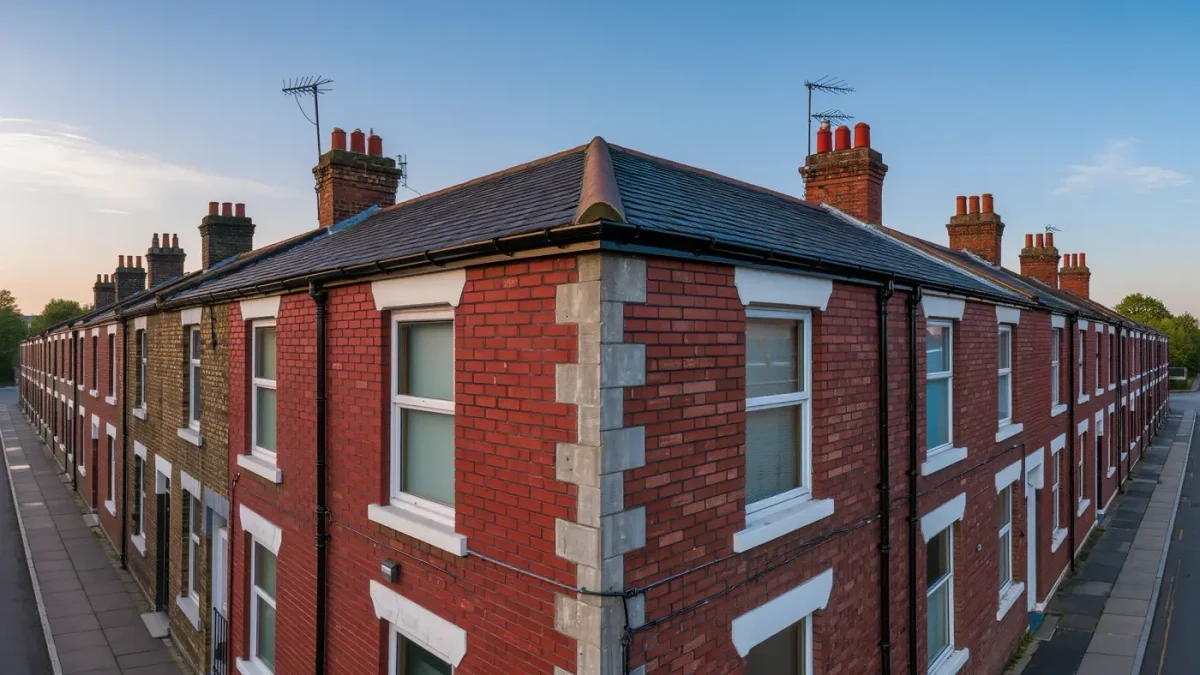
A party wall is the shared wall standing on or astride the boundary between two properties — in a row house, both side walls are usually party walls, owned jointly by the homes on either side and governed either by a written party wall agreement or by state and municipal law. Roughly half the states carry party-wall statutes on the books, and older cities — Philadelphia, Baltimore, Boston, New York, Washington — layer local rules on top. What that means at purchase time: you are buying a structural asset you control only in partnership with a neighbor you did not choose.
The partnership is usually silent for decades. The whole job of due diligence is making sure it stays silent.
What does joint ownership actually mean?
Each owner holds an easement-like right: the wall supports both houses, each owner may use it (to hang, fasten, bear beams), and neither may remove, weaken, or open it without the other's rights being respected. The classic rule set, inherited from common law and codified variously: neither owner's negligence may damage the wall; if one owner's work damages it, that owner repairs at their own cost; if the wall needs repair for shared benefit, costs are typically shared equally unless an agreement says otherwise; and a damaged or destroyed wall is generally rebuilt at joint expense. Fire, demolition of the neighboring house, and renovation work are the three events that surface all of this.
What is a party wall agreement?
A private contract, recorded with the deeds, that supplements or replaces the defaults — the row's developer may have recorded one when the houses were built, and it travels with the property forever. Typical contents: maintenance cost splits, access rights to the neighbor's lot for repairs, procedures and notice requirements before any work touching the wall, and what happens on rebuild after destruction. During your attorney review period, the title search should surface any recorded agreement; read it, because its terms beat the statutory defaults. If no agreement exists, your state or city statute fills in — your attorney can cite the local one in a memo you keep with the deed.
What should you check before buying?
- Structural condition of both ends: your inspector should look at the party wall in the basement and attic — bowing, step cracks in masonry, patched openings from removed flues.
- The neighbor's structure: a fire, underpinning, or excavation next door is your event too; look at the neighboring house's condition, because its problems load your wall.
- Recorded agreements and permits: any prior opening, underpinning, or addition bearing on the wall should appear in permit history — unpermitted openings are the classic inherited liability.
- Sound and fire performance: in older rows, the wall between you and the neighbors may be two wythes of brick (good) or a single thickness with legacy chases (less good); the 7 p.m. visit is diagnostic.
What happens when you renovate?
Any work touching the wall — cutting a pass-through, embedding beams for a wider opening, underpinning the foundation, rebuilding a chimney — triggers notice to the neighbor and commonly a formal party wall process: some jurisdictions require a party wall surveyor or engineer to document pre-work condition on both sides. Doing the work without notice converts a routine kitchen project into a dispute with an audience. The professional pre-condition survey (photo documentation of the neighbor's interior, agreed by both sides) is cheap insurance against claims that your dust was their crack.
What goes wrong, really?
Three recurring scenarios. The neighbor demolishes or gut-rebuilds, removing the wall's counterfort support — masonry rows lean on each other, and removing one house can require temporary bracing of yours, at their expense in most rules, but only if the process is followed. A fire destroys the neighbor's house and the wall with it — insurance and rebuild obligations then follow the agreement or statute. And the slow one: a neighbor's contractor pours a new footing against an old wall, and cracks appear months later; the pre-condition survey is what settles it. In every scenario, the owner with documents wins the conversation.
FAQ
Who owns a party wall between two houses?
Both owners, jointly — each holds rights to use and support obligations for the shared wall, governed by a recorded party wall agreement if one exists, otherwise by state or municipal party-wall law. Neither may alter or weaken it unilaterally.
Who pays to repair a party wall?
By the common default, shared repairs for mutual benefit are split equally; damage caused by one owner's work or neglect is that owner's responsibility. A recorded agreement can override these defaults, so read it before closing.
Do I need my neighbor's permission to cut into a party wall?
Not permission exactly, but formal notice — and in many jurisdictions a party wall surveyor or engineer and a documented pre-condition survey. Skipping notice exposes you to liability for any cracking or damage that appears afterward, related or not.