Concrete seems like the most permanent material in the city. Yet anyone who walks past an aging parking deck has seen the telltale signs: rust stains, cracks, and chunks of surface that have broken away. The building is not that old. So why is it falling apart already?
The answer lies in a quiet chemical process called carbonation, and in the steel bars hidden inside the concrete. Once you understand how these two work together, the way modern buildings age makes much more sense. Readers following this should also see What makes a building Brutalist, and why people pay to live in them.
What carbonation actually does
Fresh concrete protects its steel in a simple way. The water inside the pores of the concrete is highly alkaline, and this keeps the steel surface passive, so it does not rust. Carbonation changes that. Carbon dioxide in the air diffuses into the concrete from its surface and reacts with calcium hydroxide in the paste. The pH of the pore water then falls from about 13 down to about 8.5. Below a pH of roughly 9.5 to 10, the thin oxide layer on the steel stops protecting it, and the reinforcement bars are no longer passivated against corrosion.
How rust cracks concrete apart
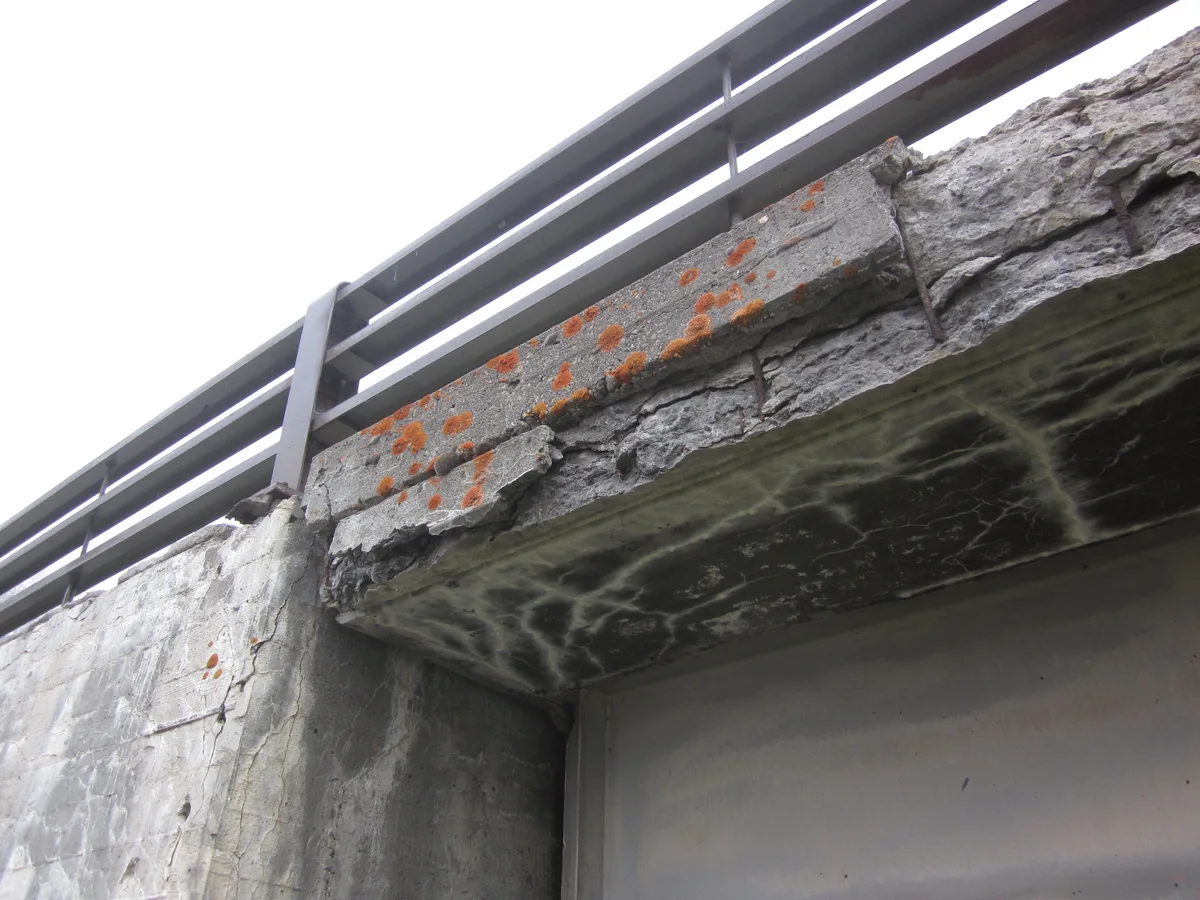
Once the steel corrodes, the real damage begins. Iron rust takes up far more space than the metal it came from. The corrosion products are about 6 to 7 times less dense than the iron, so they are 6 to 7 times more voluminous. That expansion creates strong internal stress inside the concrete. Cracks form, and they grow. If the bars were poorly placed, or the concrete cover over them was too thin on surfaces exposed to the weather, oxide jacking and spalling follow. Spalling is easy to spot: flat fragments of concrete break away from the surface as the rebar beneath corrodes.
Water is the main enemy
None of this works well without moisture. Water is probably the most destructive agent acting on concrete structures. It takes part directly in harmful reactions, and it carries the dissolved chemicals that make those reactions possible. Without water, many damaging processes stall or run so slowly that they pose little risk over the life of the building. Dry concrete lasts far longer than water-saturated concrete in contact with flowing water. This is why the first goal of concrete care is simple: keep water out of the structure. We covered a connected angle in Metal cladding and rain screens: how buildings shed water without rotting.
Why some concrete lasts for centuries
Plain concrete, with no steel inside, is a remarkably tough material. It resists compression well, and carbonated concrete is actually quite solid on its own. The dome of the Pantheon in Rome, made with Roman concrete more than 2000 years ago, shows how durable it can be. The weakness is tension. Concrete cannot handle stretching forces, so steel bars are added to take them. Those bars are the Achilles heel. Protective options exist, such as zinc galvanization or epoxy coating of the bars, but they bring trade-offs: lower surface adhesion to the concrete, a risk of galvanic corrosion if the coating is punctured, and higher costs.
Conclusion: keep water out and check the cover
Modern buildings do not age faster because concrete got worse. They age because steel and concrete work as a team, and carbonation breaks up that team. The chemistry is slow but steady, and moisture makes it faster. The practical lesson is clear. Watch for cracks and rust stains, keep surfaces drained and dry, and make sure the concrete cover over the bars stays intact. Small repairs done early stop the chain reaction before chunks start falling. To dig deeper into the chemistry, this overview of concrete degradation is a good starting point.