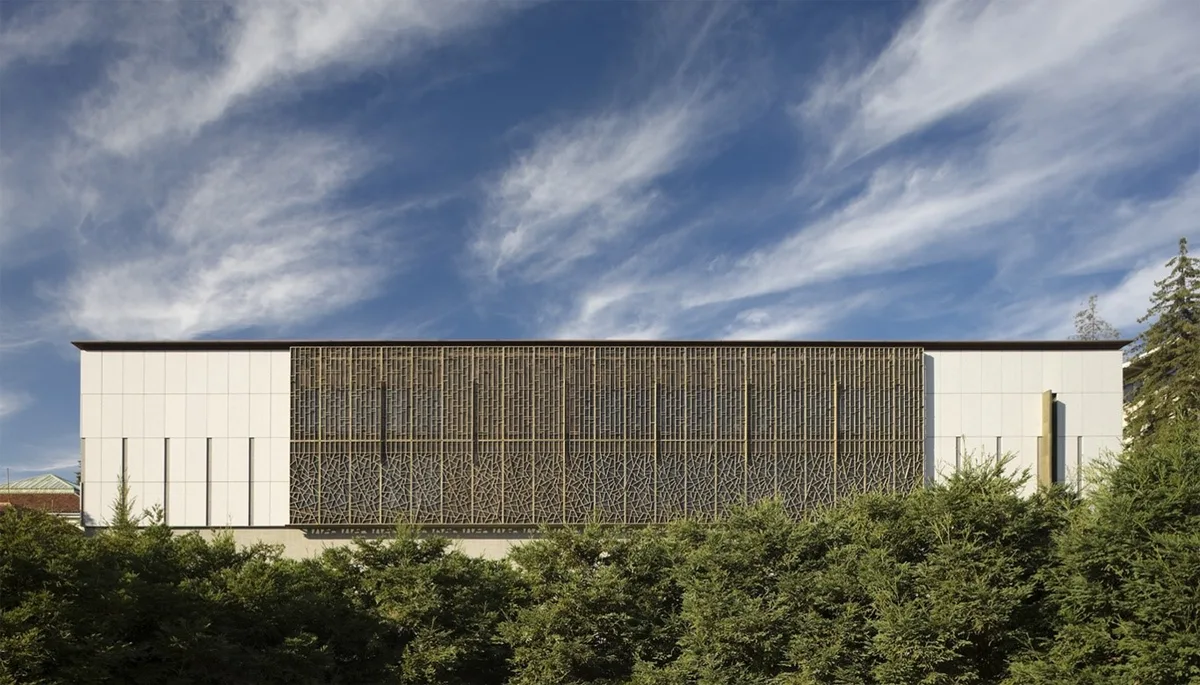
Water is patient. It sits along a roof edge, soaks a joint, and waits for a path inward. Given years rather than months, it finds one, and the damage rarely stays cosmetic. Wet insulation stops working, wood framing swells and softens, and mold follows close behind.
Good wall design assumes water will get past the outer surface, then gives it a managed exit. That is the quiet logic behind rain screens and cladding, and it is easier to follow than most building science. We covered a connected angle in What makes a building Brutalist, and why people pay to live in them.
Two Layers With Different Jobs
Cladding is the application of one material over another to provide a skin or layer. In construction it adds thermal insulation, weather resistance, and a better face to a building, in materials from wood and brick to vinyl and metal. Standard references on cladding add a useful caveat: the outer skin does not itself need to be waterproof. It only needs to direct water or wind safely away from the structure.
Metal earns its place on that list. Single-skin metal panels are among the most commonly available cladding types for industrial and commercial projects, valued for high durability and easy installation on low-maintenance builds.
What a Rain Screen Actually Does
A rain screen is an exterior wall detail in which the siding stands off from the moisture-resistant barrier applied to the sheathing. That gap creates a capillary break and allows drainage and evaporation. The standard definition of a rainscreen describes a system rather than a single product: cladding, a drainage plane, and a barrier working as one assembly.
Water reaches a wall by four routes: capillary action, gravity, momentum, and air pressure from wind. The rain screen answers each one. It separates the outer skin from the barrier so water cannot wick across, and it hands stray droplets a downward path instead of a passage inward. For related coverage, see What is an ADU, and how does adding one to your property actually work?.
The Air Gap Does the Heavy Lifting
The cavity is usually built with furring, thin battens fastened to the wall, with openings at the bottom and the top so air can rise through. Moving air dries the barrier side of the wall and keeps insulation dry, which helps prevent mold formation and water leakage inside the assembly.
The gap also tames wind. When ventilation openings are large enough, air pressure nearly equalizes on both sides of the cladding. With no pressure difference to push, rain loses its drive through panel joints, and the few drops that get past run down the back of the cladding and drain away.
Details That Decide the Outcome
Small choices carry the system. Building Science Consulting recommends keeping the drainage cavity at least three-eighths of an inch deep, though independent testing by one manufacturer suggests that shallower gaps can still drain. Mesh over the ventilation openings keeps insects out, with recommended apertures of three to four millimeters.
The drainage path must stay open. Mortar droppings and excess stucco commonly plug cavities, and a plugged path leaves water standing where it should never collect. Details at the top and the bottom of the wall need to let moisture weep out and air keep moving.
When Water Gets In Anyway
The system assumes leaks, it just refuses to let them linger. A drainage plane exists to move liquid moisture from the high point where it enters to a low point where it exits, and to do it quickly, before absorption begins. That speed is what prevents rot, mold, and structural degradation.
Fire deserves one honest line as well: cladding can become a fire risk by design or material, and an open cavity can draw hot air upward like a chimney. Material choice and careful cavity detailing therefore belong in the safety conversation, not in an afterthought.
Conclusion
A wall that stays dry is not a wall that keeps every drop of water out. It is a wall that expects water, gives it a slick path downward, and dries the remnants with moving air. Metal cladding supplies the tough outer face, the rain screen supplies the physics, and the building stays sound for decades.