A hospitality house is a nonprofit lodging operation that offers cheap or free rooms to patients and the families who travel with them, usually within walking distance of a major hospital. It is not a hotel, not a hostel, and not an apartment building, even though the building type often looks like all three at once. The stay is tied to a medical reason, and the house keeps its doors open through donations rather than nightly rates.
The model exists because of a simple mismatch. Specialty care is concentrated in a few large medical centers, but the people who need it live everywhere. Treatment can stretch for weeks, and hotel rooms near those campuses are priced for business travelers. A hospitality house fills the gap: a bed, a kitchen, and a short commute to a hospital room. What the model gets in return is a funding question, and that question is where this piece lives.
The word itself is older than the industry. According to Wikipedia, hospitality is the relationship of a host toward a guest, received with goodwill and welcome, and the word derives from the Latin hospes — a term that meant host, guest, and stranger all at once. That same root gave us hotel, hostel, hospice, and hospital, which is why the vocabulary of the sector sounds so tangled. A hospitality house sits closer to the original meaning than any hotel does: the guest arrives with a need, not a booking.
What does a hospitality house actually provide?
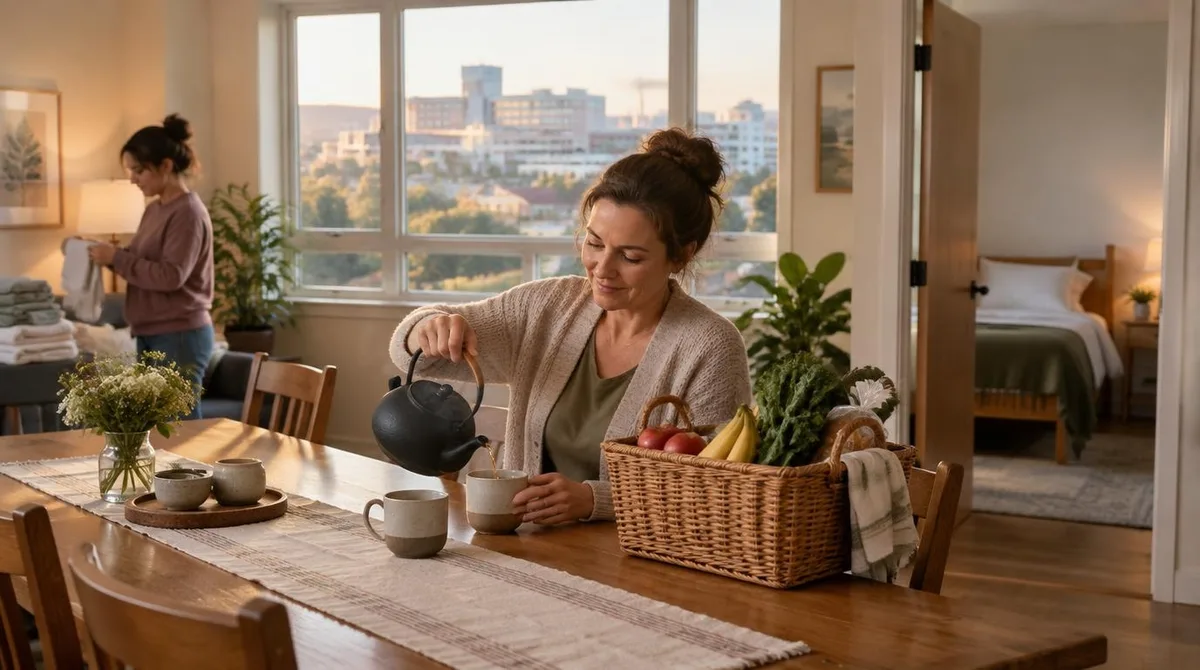
The core product is a private room with a shared or private bath, plus a communal kitchen where guests can cook for themselves. Most houses add laundry, storage, quiet lounges, and sometimes shuttle runs to the medical campus. The kitchen matters more than any of it. Families under medical stress often cannot face restaurants, and a stocked kitchen lets a parent keep a child's diet on track through weeks of treatment.
The second product is harder to put on a floor plan: proximity. Staying minutes from an intensive care unit means a family can be present for rounds, for emergencies, for the small windows when a patient is awake. That is the entire justification for the model, and it is why houses cluster immediately around major hospitals rather than wherever cheap real estate sits.
House rules tend to be stricter than a hotel's. Many houses screen guests through a referral from a hospital social worker or clinic, set maximum stay lengths in line with their own policies, and require that the guest be actively in treatment or supporting someone who is. Those rules protect the mission — the rooms are scarce, and the demand is not.
How is a hospitality house funded, if guests pay little or nothing?
Three revenue streams, roughly in order of importance. First, donations: individual gifts, corporate sponsors, and community fundraisers carry most houses. Second, guest contributions: many houses ask for a nominal nightly amount, sometimes on a sliding scale, sometimes waived entirely when a family cannot pay. Third, program support: grants from foundations and health systems, and in some cases an affiliated hospital covering part of the operating cost because the house solves a problem the hospital would otherwise own.
Here is our analysis of the economics, in plain terms. A hotel underwrites its building with rate and occupancy; a hospitality house underwrites it with philanthropy and a much lighter service load. No restaurant, no daily housekeeping to a hotel standard, no revenue management team. The trade is lower revenue per room against a lower cost per room and, crucially, a donor base with an emotional connection to the mission. The risk that breaks the deal is the same one that breaks any fixed-cost building: if donations soften while the roof and the boiler do not care, the house faces a capital gap. Houses that last tend to own their buildings outright or hold long-term hospital support, because rent is the expense that kills a thin-margin nonprofit first.
Readers who want the broader sector context — where lodging, food, travel, and events sit relative to each other — will find the map in our piece on what the hospitality industry is, exactly. A hospitality house borrows the building type of one sector and the funding logic of none of them. This connects to our earlier piece, What is the hospitality industry, exactly? Four sectors under one umbrella.
Who runs these houses, and what does the work look like?
Staffing is a blend of a small professional team and a large volunteer corps. A house director handles operations and fundraising; a guest-services coordinator manages referrals, check-ins, and the delicate job of turning families away when the house is full; housekeeping and maintenance keep the building running. Volunteers cover front desks, cook community meals, and drive shuttles. The skill set overlaps heavily with mainstream lodging management — as Coursera's guide to hospitality management notes, the field spans lodging, food and beverage, and guest services, and runs on customer service, communication, and problem-solving. The difference is that the guest here is not choosing to be a guest. Empathy is not a soft skill in this setting; it is the job description.
The emotional labor is real and worth naming. Guests are frightened, tired, and often far from home. A front-desk conversation at a hospitality house can involve a diagnosis, a death, or a flight rebooked at midnight. Houses that do this well invest in staff support the way a busy hotel invests in housekeeping hours — as an operating necessity, not a perk.
Why does the design of a hospitality house matter so much?
Because the building is doing therapeutic work, whether the architect intended it or not. The best houses read as domestic, not institutional: a big shared kitchen table, a garden, bedrooms with real windows and doors that close all the way. Privacy and community have to coexist, so the plan usually separates private guest floors from generous common rooms. We have written before about how hotel lobbies now borrow from living rooms, and a hospitality house runs that logic in reverse — it is a living room that has learned to behave like an institution when it must. Readers following this should also see Why hotel lobbies look like living rooms now.
Materials and maintenance deserve the underwriter's eye. These buildings run hard, on tight budgets, with guests who stay for weeks. Durable finishes, forgiving flooring, and a serious preventive-maintenance schedule are not luxuries; deferred maintenance is the quiet way a mission-driven building loses its donors.
What should a supporter or volunteer know before getting involved?
Start with the house's funding mix, because that tells you where help is most useful. A house that owns its building and has stable hospital backing may need volunteers more than money; a house carrying a mortgage may need the opposite. Ask to see the guest statistics the house itself reports — occupancy, average stay, how many families were turned away — and treat those numbers as the operator's own account, not an independent audit. Ask about the referral process, because a house is only as useful as its connection to the medical center next door.
Practical steps, in order: find the house serving your nearest major medical center; check whether it takes direct bookings or requires a clinical referral; look at its published wish list and volunteer calendar; and if you give, consider recurring gifts over one-time ones, because payroll and utilities arrive monthly. For more on the vocabulary and the deeper history of the word — from the Latin hospes to the modern industry — our explainer on what hospitality really means traces the lineage, and the hospitality hub collects the rest of our coverage.
The takeaway on hospitality houses
The evidence here establishes the model, not the numbers. A hospitality house is a nonprofit lodging operation for patients and caregivers, funded by donations and modest guest contributions, run on a staffing model that mixes professionals with volunteers, and designed to feel like a home because its guests are living through the hardest weeks of their lives. What remains unknown, house by house, is the funding durability — the one variable that decides whether the doors stay open. The etymology is the cleanest summary of the whole thing: host, guest, and stranger were once the same word. A hospitality house treats them that way.