Residential electrical wiring is the network of circuits that carries power from your utility meter, through a central panel, to every outlet, switch, and fixture in the house. Understanding it at a basic level matters for one big reason: it tells you which problems you can safely watch and which ones mean put the screwdriver down and call a licensed electrician. The wiring itself is mostly hidden, so the panel, the outlets, and the way a room behaves are your windows into it.
The word itself is plain enough. Cambridge Dictionary defines residential simply as relating to places where people live, and that is the whole scope here — houses and apartments, not commercial buildings with their very different rulebooks. A home's system is designed around smaller loads, simpler circuits, and a family's daily rhythm rather than around equipment rooms and three-phase machinery.
This guide covers what a panel does, how circuits are organized, what the common warning signs look like, and where the honest line sits between homeowner territory and professional work. We'd start with the panel, because everything else hangs off it. If you're weighing a purchase, our new construction or resale checklist pairs well with this primer.
What does the electrical panel actually do?
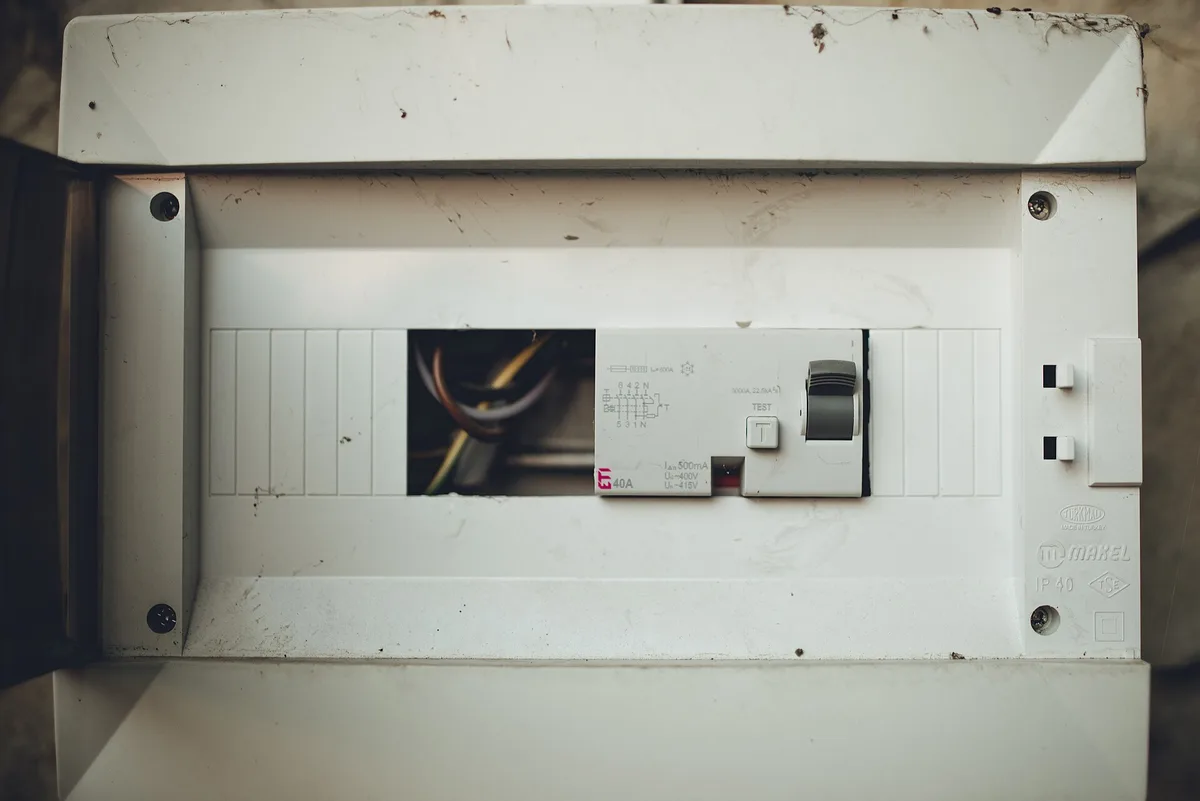
The panel — most people call it the breaker box — is the traffic hub of the whole system. Power enters the house through the meter, lands in the panel, and gets divided across individual circuit breakers, each protecting one circuit. If too much current flows on a circuit, the breaker trips, cutting power before the wire inside the wall can overheat. That trip is a safety feature doing its job, not a nuisance to be defeated.
Two things on the panel deserve your attention. First, the main breaker, which shuts off everything at once and is what an electrician will reach for before any serious work. Second, the labels. A panel with accurate, legible labels — "kitchen outlets," "bedroom 2 north wall," "garage" — makes every future repair faster and safer. A panel labeled "misc" in faded pencil is a small red flag worth noting. Never open the panel's cover yourself; the inside is live even when the breakers are off, and the work inside belongs to a professional.
How are the circuits in a house organized?
A circuit is a loop: power leaves the panel on a hot wire, does its work at an outlet or fixture, and returns on a neutral wire, with a bare or green ground wire alongside as an emergency path. Kitchens, bathrooms, and laundry areas typically get dedicated circuits because appliances there draw heavy, sustained power. Lighting and general outlets run on their own circuits, often grouped by room. Outdoors, garage, and basement circuits are usually separate too.
Why does this matter to you? Because when a breaker trips, the pattern tells a story. One breaker tripping once is usually a genuinely overloaded circuit — a space heater and a toaster on the same line, say. The same breaker tripping repeatedly is a symptom, not a coincidence, and it's an electrician conversation. And if the whole panel is a mystery of unlabeled switches, asking the seller or your electrician for a proper circuit map is a reasonable, cheap request.
Which warning signs should a homeowner never ignore?
Wiring problems usually announce themselves before they become dangerous. Watch for these, and treat any of them as a call-a-professional moment rather than a weekend project:
- Breakers that trip again and again on the same circuit, or a main breaker that trips with no obvious cause.
- Warm, discolored, or buzzing outlets and switches. Heat and buzz mean resistance where there shouldn't be any.
- A burning smell with no visible source, especially a sharp, plastic-like odor near an outlet or the panel.
- Flickering lights that persist after you've changed the bulb, or lights that dim when a large appliance kicks on.
- Two-prong outlets on ungrounded circuits, or outlets that won't hold a plug firmly.
- Any tingle or shock from touching an appliance, a faucet, or a switch. Even a small one.
One affectionate aside: freshly painted walls can hide a lot, and so can freshly painted outlets. A cover plate replaced over scorch marks is the electrical version of our old warning — freshly painted for a reason. Look at the whole context, not just the surface.
What can a homeowner safely do, and what belongs to a pro?
The safe list is short and genuinely useful. Reset a tripped breaker: flip it fully off, then back on. Test and reset GFCI outlets — the ones with the small test and reset buttons, required in kitchens, bathrooms, and other wet locations because they cut power in milliseconds when current leaks. Replace light bulbs within fixtures' rated limits. Replace a broken cover plate with the power off at the breaker, and only if the wiring behind it looks untouched and sound. Swap a light fixture for an identical one only if you're confident, the breaker is off, and you verify power is actually off with a tester — and even then, many people rightly choose not to.
Everything else belongs to a licensed electrician, and local rules usually say so formally: new circuits, panel work, anything inside the wall, anything involving the service entrance, and most work that requires a permit. Permits and inspections exist for your protection — they create a paper record that the work was done to code, which matters enormously when you sell. Our reporting on what Passive House certification means for a homebuyer makes a related point: documented, verified building systems carry real weight at resale.
How does wiring affect buying, renovating, and daily life?
If you're buying, the electrical system is one of the quiet cost drivers worth probing. Ask the age of the panel and whether the wiring has been updated, and read the inspector's report on those pages closely rather than skimming to the summary. In older homes, ungrounded outlets and an undersized panel are common findings, and both are fixable — the point is to know before you own. Our residential section regularly covers how these systems show up in inspection reports.
If you're renovating, sequence matters. Electrical work happens early, inside the walls, before insulation and drywall close everything up. Plan your outlets the way you actually live: where the chargers land, where the toaster sits, where the TV hangs. It is far cheaper to add an outlet during a renovation than after. And if you're adding heavy new loads — an EV charger, an electric range, a heat pump — tell your electrician the full picture at the start, because the panel may need capacity work first. The same early-planning logic applies to other concealed systems; readers weighing a lift have found our piece on residential elevators: what to check before you commit a useful model for how to scope hidden infrastructure.
Day to day, the habits are simple. Know where your panel is and keep the area around it clear. Keep a flashlight near it, because breakers trip at night. Label anything an electrician relabels. And when a circuit misbehaves twice, stop resetting and start dialing.
The takeaway: understand the system, respect its limits
What the evidence of every electrician's career establishes is this: a home's wiring is safe when it's left alone to do its designed job, and dangerous when it's improvised around. Learn your panel, learn your circuits, learn the warning signs, and treat the inside of the walls as professional territory. The unknowns — your panel's exact age, your wiring's condition behind the plaster — are answerable with one inspection and one honest conversation with a licensed electrician. That's a small investment for the system every other system in the house depends on.