The houses moving fastest in late 2025 were not the biggest ones on the block. Across U.S. metro areas tracked by the Census Bureau's new-home sales data through 2025, homes under 2,400 square feet consistently spent less time on market than 3,500-plus-square-foot equivalents, and the share of new construction started at modest sizes kept climbing. The mansion did not die — it just stopped being the default prize.
This is a story about money, demographics, and heating bills, not fashion. And for anyone shopping in 2026, it changes what a smart resale purchase looks like.
What changed between the mansion era and now?
The 1990s and 2000s rewarded size because land and energy were cheap and loans were cheaper. Per the Census Bureau's characteristics of new housing, the median new single-family home grew from about 2,100 square feet in 2000 to roughly 2,500 by the early 2020s, then flattened and began drifting down as mortgage rates rose. When a 30-year loan costs two and a half times what it did in 2021, every square foot carries a monthly payment, and buyers start doing arithmetic their parents skipped.
Three forces compound the math. Heating and cooling a large, poorly detailed house costs more every month. Property taxes scale with finished area. And the buyer pool for an 8-bedroom house is thin, which matters on the day you need to sell.
Who is buying the smaller houses?
Two generations overlap here. First-time millennial buyers, now in their thirties and forties, want a working kitchen, a home office, and a yard — not a two-story entry and a formal dining room they will use twice a year. At the other end, empty-nest boomers are selling the family house deliberately and buying smaller, single-story homes with their next decade in mind.
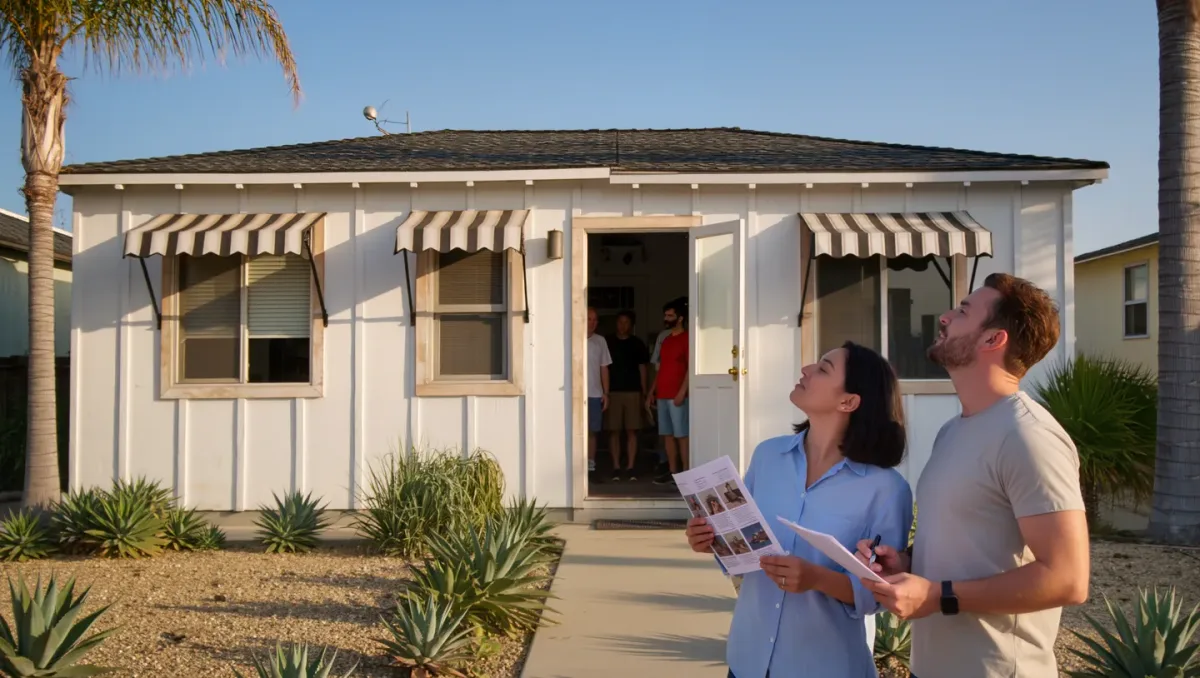
Builders noticed. Tour a new subdivision in 2025 and the model unit is likely a three-bedroom around 1,800 to 2,200 square feet, with a flex room that can be a nursery, an office, or a gym — one room, three marketing brochures. The four-car-garage elevation is still in the catalog, but it is on page twelve.
How much does size actually cost per month?
Rough numbers make the point. At a $300-per-square-foot price, the difference between a 2,000-square-foot home and a 3,500-square-foot one is $450,000 of principal. With mortgage rates in the six-percent range through 2025, per Freddie Mac's weekly survey, that difference is well over $2,000 a month before taxes and insurance. Energy adds more: a compact, well-sealed house can heat and cool for a fraction of a drafty volume-builder special from 2005.
| Home profile | Typical size | Who buys it fastest |
|---|---|---|
| Cottage / bungalow | 1,000–1,600 sq ft | First-time buyers, downsizers |
| Modest family home | 1,800–2,400 sq ft | Families with 1–2 children |
| Large family home | 2,500–3,500 sq ft | Larger households, luxury tier |
| Estate / mansion | 3,500+ sq ft | Thin, slower-moving buyer pool |
Does smaller mean worse?
Not anymore, and this is where design earns its keep. A 1,900-square-foot house with a good plan — storage where you actually need it, sightlines that make rooms feel bigger than their tape measure, one honest mudroom instead of a formal foyer — outlives a poorly planned 3,000-square-foot house in daily satisfaction. The storage question is the one buyers under-ask: the cottage either has a real plan for bikes, tools, and holiday boxes, or it will feel small within a year.
The trade-offs are real, too. Smaller houses mean less privacy when the in-laws visit, less room to spread out during a work-from-home day, and less flexibility if the household grows quickly. The honest question is not "how big?" but "which rooms will we actually sit in?"
What should a buyer take from the trend?
Buy the smallest house that fits your real life, in the best location you can afford, with an eye to the day you sell it. Location appreciates; square footage is a depreciating fashion statement with a utility bill attached. If a smaller home is well-built and near the things you use weekly — school, work, groceries, a park — it will hold value precisely because the buyer pool for it keeps growing while the pool for mansions shrinks.
And when you tour, judge the plan, not the square footage number. Measure whether your sofa wall exists, whether the kitchen has a real work triangle, whether the bedroom fits a bed and a path around it. Those details decide how a house lives; the totals line on the listing decides only how it photographs.
FAQ
Is a smaller house a worse investment?
Not inherently. Land and location drive appreciation more than interior area, and demand for modest homes has been stronger than demand for very large ones through 2025. A smaller house in a walkable neighborhood routinely outperforms a mansion at the same price on both speed of sale and price resilience.
What size home sells fastest overall?
In most 2025 market reports, homes between roughly 1,500 and 2,500 square feet moved fastest — big enough for a family, small enough for the payment and utility math to stay sane. Very large homes and unusual layouts consistently took longer.
How do I judge if a small house is too small?
Paper-test your daily routines against the plan: where does everyone eat, work, and store gear? If the plan absorbs your actual schedule with room for one life change — a child, a parent, a work shift — it is big enough. If every room needs two jobs at once, keep looking.